Autodesk Forma Explained: What the Autodesk Construction Cloud Change Means for Civil and Survey Workflows
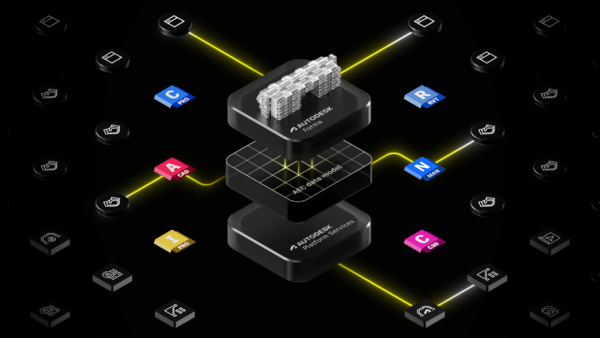
Autodesk’s integration of Autodesk Construction Cloud (ACC) into Autodesk Forma marks a significant shift in how digital project delivery is being structured across the AECO industry. While positioned as a platform evolution, the change reflects a broader move toward connected, cloud-based workflows spanning planning, design, construction, and operations.
For civil engineering and surveying professionals, this direction addresses long-standing challenges around disconnected data, fragmented workflows, and inconsistent project information. Survey data often sits outside design environments, while design updates do not always flow cleanly into construction. Autodesk Forma aims to resolve this by bringing previously separate systems into a single, data-driven platform.
Autodesk Construction Cloud to Autodesk Forma: What’s Changing
From March 24, 2026, Autodesk Construction Cloud becomes part of Autodesk Forma, with updated product naming across the platform:
-
Autodesk Docs → Forma Data Management
-
BIM Collaborate Pro → Forma Design Collaboration
-
Autodesk Build → Forma Build
-
Autodesk Takeoff → Forma Takeoff
-
Autodesk Forma (original) → Forma Site Design
Despite these changes, Autodesk has confirmed this is not a disruptive migration. There is:
-
No data migration required
-
No change to APIs or integrations
-
No impact on licensing or user access
For civil infrastructure projects, this continuity is critical. Long project lifecycles mean stability is essential, and Autodesk’s approach ensures teams can continue working while the platform evolves.
A True Common Data Environment for Civil and Survey Projects
At the centre of Autodesk Forma is Forma Data Management, which becomes the common data environment (CDE) across the entire project lifecycle.
For civil and survey workflows, this is particularly important. Traditionally, survey data is:
-
Recreated across multiple stages
-
Transformed between formats
-
Prone to versioning issues
By maintaining survey and design data within a connected environment from the outset, Autodesk Forma improves:
-
Data integrity
-
Version control
-
Cross-discipline coordination
This creates a more reliable foundation for civil engineering design, construction coordination, and infrastructure delivery.
Connecting Civil 3D, AutoCAD and Cloud Workflows
A key development within Autodesk Forma is the introduction of Forma Connected Clients, designed to bridge desktop software and cloud platforms.
Revit is the first Forma Connected Client, enabling users to access cloud-based data and analysis directly within the desktop environment. This removes the need for:
-
File exports and imports
-
Data duplication
-
Workflow interruptions
For civil and survey teams, the future integration of Civil 3D and AutoCAD into Forma will be particularly impactful. It will allow:
-
Seamless movement between survey data, design models, and construction workflows
-
Improved collaboration across project teams
-
Reduced manual handling of large datasets
Expanding Capability: Estimating and Site Design in Autodesk Forma
Autodesk is also expanding Forma’s capability across the project lifecycle.
The introduction of Autodesk Estimate connects:
-
2D and 3D takeoffs
-
Cost data
-
Materials and labour calculations
For civil contractors and infrastructure projects, this creates a stronger link between design data and project costing, improving accuracy during tendering.
At the early-stage planning level, Forma Site Design (formerly Autodesk Forma) continues to support:
-
Site feasibility analysis
-
Environmental modelling
-
Early design decision-making
Importantly, data created at this stage now flows directly into downstream workflows without being recreated.
AI in Autodesk Forma, Civil 3D and AutoCAD Workflows
Artificial intelligence is a major component of Autodesk’s long-term strategy. Tools like Autodesk Assistant are being introduced into Civil 3D, AutoCAD, and Revit to support:
-
Automated design validation
-
Natural language interaction with project data
-
Reduction of manual engineering tasks
For civil and survey professionals, this represents a shift toward:
-
Less time spent on repetitive processes
-
Greater focus on engineering decisions
-
Improved consistency across deliverables
As AI capabilities expand, they will play a larger role in civil design automation and infrastructure project delivery.
From File-Based Workflows to Real-Time Collaboration
Autodesk Forma is also driving a shift toward real-time, collaborative workflows.
Tools such as:
-
Forma Board (digital whiteboarding)
-
Autodesk Workshop XR (immersive design review)
are designed to improve coordination across project teams.
For civil infrastructure projects, this enables:
-
Earlier issue detection
-
Improved stakeholder communication
-
Reduced design clashes and rework
The broader trend is clear—moving away from static file exchanges toward live, shared project data environments.
Extending Autodesk Workflows into Asset Operations
Autodesk Forma extends beyond construction through integration with Autodesk Tandem and capabilities like Tandem Insights.
This allows project data to continue delivering value into:
-
Asset management
-
Facility operations
-
Infrastructure lifecycle management
For long-term infrastructure projects, maintaining accurate survey and design data into operations is becoming increasingly important.
What Autodesk Forma Means for Civil Survey Solutions Clients
For Civil Survey Solutions clients, Autodesk Forma reinforces key industry trends:
-
Increased adoption of Autodesk Construction Cloud and connected platforms
-
Greater reliance on shared survey and design data
-
Growing integration between Civil 3D, AutoCAD, and cloud workflows
-
Expansion of AI in engineering and design processes
The benefit is clear, better coordination, reduced rework, and improved project outcomes.
The Future of Autodesk Workflows in Civil Engineering and Surveying
Autodesk Forma represents a structural shift toward:
-
Connected data ecosystems
-
Integrated project delivery
-
AI-assisted engineering workflows
While the immediate impact may be incremental, the long-term direction is clear. The industry is moving toward more efficient, data-driven, and collaborative civil and infrastructure workflows.
Final Thoughts
The transition from Autodesk Construction Cloud to Autodesk Forma is more than a naming change. It reflects a broader move toward connected, intelligent project delivery across the AECO industry.
For civil engineers and survey professionals, this shift will support:
-
Improved data accuracy
-
Stronger collaboration
-
More efficient project execution
Autodesk Forma is laying the foundation for the next generation of civil engineering and survey workflows.
About The Author

We are the leading provider of civil engineering and survey software solutions and services in Australia.